
School Refusal Treatment Programs
School refusal treatment plans and structured support techniques to help your child thrive

%20(1).avif)
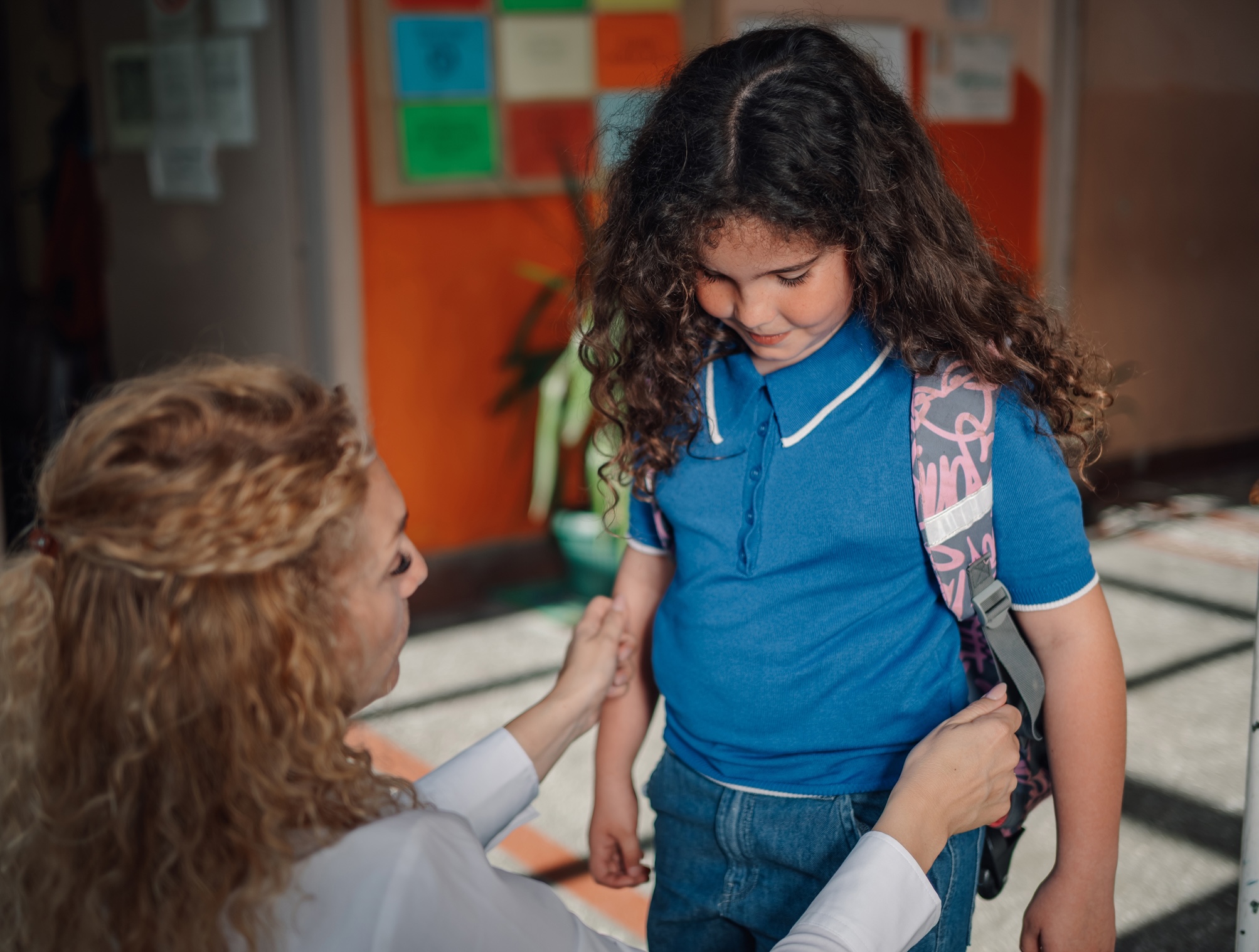
Help your child navigate the challenges they’re facing and take steps forward with school refusal treatment
School refusal can feel overwhelming for both children and parents. Our specialized approach prioritizes identifying the underlying cause of your child’s school refusal and working on treatment that helps them get back to school.
Our tailored school refusal programs provide structured support and proven school refusal interventions to help children return to school with confidence.
It’s ideal for families who experience:
Intense School Refusal Anxiety and OCD School Refusal: Children may experience fear, worry, and physical symptoms that keep them from going to school due to bullying, OCD, BDD, panic, GAD, performance anxiety, selective mutism, etc.
Disrupted Family Life: Parents may feel helpless or overwhelmed trying to encourage school attendance.
Academic and Social Delays: Missing school leads to academic and social setbacks, affecting a child’s development.
%20(1).avif)
What does Bio Behavioral do differently to help deal with school refusal?
Identifying Underlying Causes of school refusal
We identify the underlying reason for the poor attendance or outright refusal—many children who refuse school are suffering from a disorder that can effectively be treated with evidence-based therapy.
Comprehensive Assessments and Personalized Plans
Every child’s plan is customized based on their unique challenges and needs. Our approach will help us understand why your child is refusing school and what it takes to get them to go again.
Flexible, Family-Centered Approach
Our team works closely with parents to do whatever it takes to get your child back in school—whether that’s being part of the morning routine, drop-off, the school day itself, or advocating in the CSE meetings.
How we treat school refusal
Our school refusal programs combines multiple interventions for school refusal to ensure comprehensive support and long-term results.
Helps children address underlying anxiety and build confidence through evaluation for the underlying cause. Evidence-based intervention to first address these causes rather than just treat the observable behaviors, such as absenteeism or refusal.
Targeted therapies to address the underlying causes with evidence-based therapy. Treatment approach varies depending on the underlying disorder.
We teach parents strategies to encourage attendance without reinforcing anxiety.

"I came to Bio Behavioral after years of being diagnosed from having neuroses to schizophrenia. It was there that I found people who understood me and helped me. They interviewed me at length and knew I had OCD. A care plan was implemented and they were with them every step of my journey. Everyone there on the team had studied OCD and knew how to diagnose and treat. I can never thank Bio Behavioral enough”
I was recently treated at Bio Behavioral Institute for five weeks. I traveled to Great Neck, NY, and lived in a hotel. My days were filled with a personal team of doctors who were invested in my condition. I suffer from Body Dysmorphic Disorder. The treatment consisted of maladaptive thoughts, thought records, exposure worksheets before & after, mirror retraining, refocusing on the big picture when locked in rumination, values, & outside real-life exposures done with my therapist at my side. The treatments were one-on-one! No group sessions. I called my treatment team Joan!
On a personal note, I embraced values. For decades, I lived by my feelings. I learned that values are not feelings, because feelings change moment to moment. I believe short-term discomfort brings long-term rewards. Being comfortable is easy; sacrificing comfort is necessary if you desire change.
In closing, I was embraced, respected, & understood. I am not aware of another intensive program like Bio Behavioral. If you live out of state, like me, go. It will help you live a better existence. Remember, you are not alone. There is help. There is hope. There is Bio Behavioral Institute.
"I’d wrestled with swings of mood and feelings of alienation and loneliness my entire life. By the time I was the mother of three young girls I realized I was in need of help with my mental health.
I spent approximately 20-25 years, on and off, mostly on, bouncing from one provider to another, seeking treatment for depression and anxiety.
One day, during a couple years break from treatment, I listened to a program on OCD. The speakers were describing me and my family life. I tracked down the participants in the program. I was referred to Dr. Nez.
Dr. Nez for the first time in my life, explained to me in a very clear and understandable way, what I was dealing with. She taught me how to re-frame my perceptions and how to improve or modify my responses.
She has helped me and members of my family. She saved my husband’s and my marriage."
Forever grateful,
"As with many people with OCD, I did not seek treatment for several years after my symptoms began. Being in the healthcare profession when I sought treatment, I wanted to work with a therapist who had both extensive clinical and academic credentials, and with a practice that offered a myriad of treatment options.
After extensive research, I began treatment at the Biobehavioral Institute (BBI) under the direction of their Director, Dr. Fugen Neziroglu, who is a world renowned expert in treating OCD. BBI has extensive experience, and resources to treat OCD, and offers several treatment options including individual treatment sessions, and intensive therapy sessions which are available in their office, or the patient’s home.
Despite having significant limitations, and sometimes debilitating symptoms from my OCD, I credit my treatment at, and support from BBI with allowing me to continue to work in a very stressful career, and make extensive improvements in my personal life.
I would recommend anyone seeking treatment for OCD to reach out to BBI."
Frequently Asked Questions
School refusal is when a child consistently avoids or refuses to attend school due to anxiety, fear, or other underlying conditions.
Common signs include frequent physical complaints (headaches, stomachaches), anxiety or worry before school, resistance to attending school, anger, and oppositional behavior.
Encouraging small steps, creating a positive morning routine, and seeking school refusal therapy can be helpful. Our program helps to find the underlying reasons for school refusal and helps parents and therapists successfully address the problem. Common reasons for school refusal include panic, social anxiety, appearance-related concerns, OCD, and separation anxiety.
Start with a consultation. We’ll assess your child’s needs and develop a personalized school refusal treatment plan.
Absolutely. We involve parents to ensure consistency and support outside therapy sessions, which is essential for a child’s success.
Each child’s plan is developed based on their specific challenges and goals, with school refusal interventions that best meet their needs.

See your child return to school with confidence
Your child can overcome school refusal—and we can help. Our school refusal programs include key features to ensure every child receives the support they need to thrive.