
The DBT Pros and Cons Skill
Why We Make Decisions We Regret
Research shows that emotional arousal significantly impairs decision-making; when we're upset, we tend to focus on short-term relief and discount long-term consequences (Lerner et al., 2015). This is why we send the angry text, quit the job, or fall back on old habits in the heat of the moment, only to regret it later.
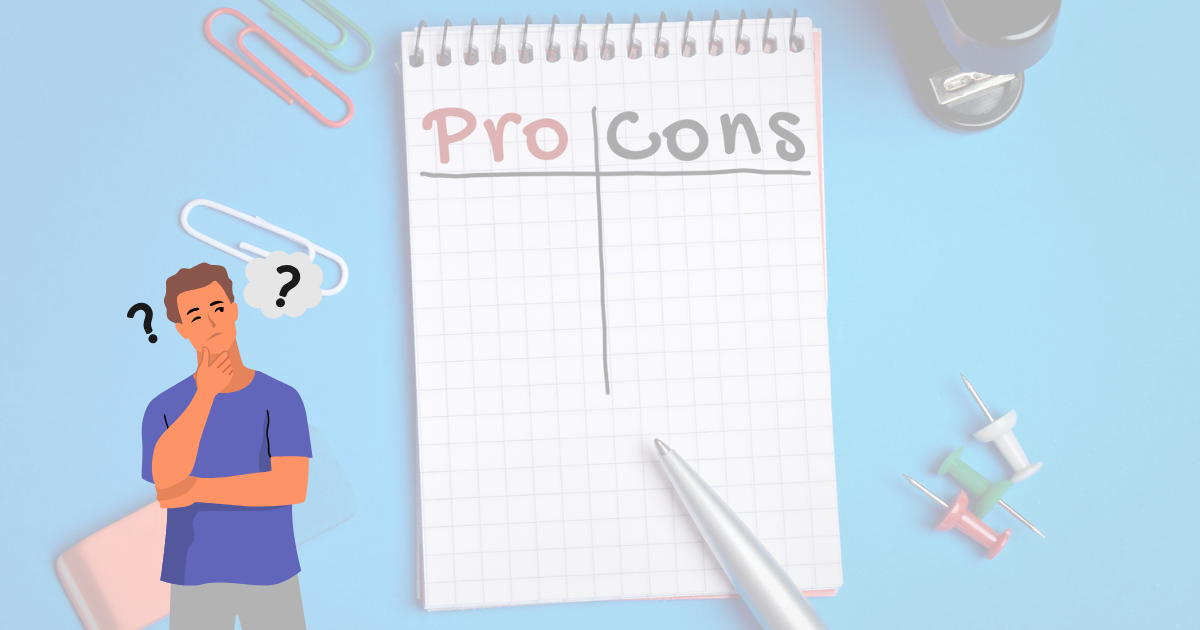
The Pros and Cons skill from Dialectical Behavior Therapy (DBT) is designed specifically for these moments. It helps you pause, engage your logical brain, and make choices aligned with your values, not just your immediate emotional state.
What Is the Pros and Cons Skill?
The Pros and Cons skill is part of DBT’s Distress Tolerance module, the set of skills designed to help you manage emotional pain without making things worse. As Linehan (2015) explains, this skill uses logical reasoning to engage the “wise mind,” the balanced place between emotion and reason.
Essentially, you weigh the benefits (pros) and costs (cons) of two options:
Acting on your urge (for example, sending an angry message, quitting a task, or using a substance), and
Resisting your urge (choosing to tolerate the distress without acting impulsively).
By walking through both sides, you give your mind time to slow down and consider the longer-term impact of your choices.
How to Use It
According to Rathus and Miller (2015), this skill can be used in any situation where emotions feel overwhelming or choices feel unclear. Here’s how to practice it:
Identify the situation or urge. Name what you feel like doing and what’s driving the impulse.
List the pros and cons of acting on the urge. Be honest about how it serves you (like relief or distraction) and what negative consequences it may have (like losing trust, safety, or self-respect).
List the pros and cons of resisting the urge. Recognize that resisting can be uncomfortable in the short term, but it often aligns more closely with your long-term goals.
Review your list when emotions are high. Keeping your list written down, in a journal or on your phone, can help you remember your values when stress takes over.
The Pros and Cons Grid
Here’s the template for any Pros and Cons exercise:
| Pros (Benefits) | Cons (Costs) | |
|---|---|---|
| Acting on the urge | What I gain short-term | What I lose/risk |
| Resisting the urge | What I protect/gain | What’s hard about this |
Filled Example: Urge to Send an Angry Email
Situation: A coworker took credit for your idea in a meeting. You want to send a pointed email calling them out.
| Pros | Cons | |
|---|---|---|
| Sending the email | Feels satisfying in the moment; they’ll know I’m upset; I “stand up for myself” | Could damage relationship; might escalate conflict; could look unprofessional; might regret the tone |
| Not sending (yet) | Preserve relationship; respond when calmer; can still address it later in person | Feels frustrating; urge to act stays uncomfortable; might feel like I’m “letting it go” |
Looking at this grid, it becomes clearer: the short-term relief of sending the email is outweighed by the potential costs. Resisting the urge is uncomfortable but protects what matters more.
When to Use the Pros and Cons Skill
This skill is particularly useful when you're facing:
Impulsive urges:
Sending an angry text or email
Quitting a job, relationship, or commitment in frustration
Making a large purchase when stressed
Using substances, food, or other behaviors to cope
Avoidance urges:
Skipping therapy, a difficult conversation, or an obligation
Isolating instead of reaching out for support
Procrastinating on something important
Running from conflict instead of addressing it
Major decisions during emotional intensity:
Ending a relationship after a fight
Making a career change when burned out
Committing to something you're not sure about
The common thread: you're torn between what feels good now and what aligns with your values long-term.
Why It Works
When we’re distressed, our brains are wired for quick, emotional action. The Pros and Cons skill works because it re-engages the logical, thinking part of the brain, allowing you to step out of emotion mind and into a calmer, more balanced space (Linehan, 2015).
By seeing both the short-term relief and the long-term outcomes of your choices, you strengthen your ability to respond mindfully rather than react impulsively. Over time, this builds self-control, insight, and confidence in handling life’s challenges.
Moving Toward Wise Mind
The Pros and Cons skill is not about perfection, it’s about balance. It helps you acknowledge your emotions while still making choices that align with your goals. As Rathus and Miller (2015) emphasize, practicing this skill regularly can turn overwhelming moments into opportunities for growth and resilience.
Pros and Cons in Action: A Real-World Example
This is a composite scenario, not a specific individual.
Taylor had been struggling with their roommate's habits for months. After another frustrating morning of dirty dishes and loud music, Taylor felt ready to move out, immediately.
Before sending a text to a new apartment listing, Taylor paused and pulled out the Pros and Cons skill:
Urge: Move out this month
| Pros | Cons | |
|---|---|---|
| Moving out | Immediate relief; no more frustration; fresh start | Breaking lease penalty; moving costs; might miss the friendship; new roommate could be worse; acting from anger |
| Staying (for now) | Keep financial stability; time to find better option; can try having a real conversation first | Ongoing frustration; feels like giving up; uncomfortable confrontation |
Looking at the grid, Taylor realized: moving out felt urgent, but the costs were high and the decision was driven by this morning's anger, not months of consideration. The urge to flee was understandable, but not aligned with Taylor's actual values (financial stability, preserving the friendship).
Taylor decided to stay for now, have an honest conversation with the roommate, and revisit the decision in a month with a clearer head.
Prepare Your Pros and Cons Before You Need Them
One of the most powerful ways to use this skill is to complete it before you're in crisis. When emotions are high, it's hard to think clearly - but if you've already written out your Pros and Cons, you can simply read what you wrote when you were calm.
How to prepare:
Identify urges that tend to show up when you're distressed (yours might include texting an ex, quitting something, drinking, isolating)
For each urge, complete a Pros and Cons grid when you're in a calm state
Save these grids somewhere accessible: your phone notes, a journal, or a card in your wallet
When the urge hits, read your pre-made list instead of trying to create one from scratch
Example urges to prepare for:
Contacting someone I've decided to stop talking to
Skipping therapy/medication/self-care
Making impulsive purchases
Sending messages when angry
Using doom scrolling to cope with stress
Having these ready is like keeping a fire extinguisher in your kitchen: you hope you won't need it, but you're glad it's there.
Learning Pros and Cons with Support
The Pros and Cons skill is simple to understand but can be challenging to apply consistently, especially when emotions are intense. A therapist can help you identify your patterns, prepare your grids in advance, and integrate this skill with other DBT tools.
At Bio-Behavioral Institute, we offer:
Individual DBT therapy: Apply Pros and Cons to your specific urges and decision-making patterns
DBT skills groups: Learn distress tolerance alongside others in a structured setting
We work with people struggling with impulsivity, emotional dysregulation, anxiety, depression, and Borderline Personality Disorder.
📞 Phone: (516) 487-7116 📧 Email: info@biobehavioralinstitute.com
Frequently Asked Questions About the Pros and Cons Skill
What is the Pros and Cons skill in DBT?
The Pros and Cons skill is a DBT distress tolerance technique that helps you weigh the benefits and costs of acting on an urge versus resisting it. By engaging your logical brain, it helps you make decisions aligned with your values rather than your immediate emotional state.
When should I use Pros and Cons?
Use this skill when you're facing an urge to act impulsively (sending an angry message, quitting something, using a substance) or to avoid something important (skipping therapy, avoiding a conversation). It's most useful when you feel torn between short-term relief and long-term consequences.
Should I make Pros and Cons lists in advance?
Yes, this is highly recommended. When you're in an emotional crisis, it's hard to think clearly. Completing Pros and Cons grids when you're calm means you can simply read them when urges hit, rather than trying to create one from scratch.
How is Pros and Cons different from regular decision-making?
The DBT version specifically addresses the tension between emotional urges and wise mind. It asks you to consider both sides (acting and resisting) with equal honesty, rather than just listing reasons for one choice.
References
Lerner, J. S., Li, Y., Valdesolo, P., & Kassam, K. S. (2015). Emotion and decision making. Annual Review of Psychology, 66, 799-823.
Linehan, M. M. (2015). DBT skills training manual (2nd ed.). The Guilford Press.
Rathus, J. H., & Miller, A. L. (2015). DBT skills manual for adolescents. Guilford Press.
More Blog Posts

Finding Relief in the Moment: The DBT Distract Skill

What Are DBT Skills? The Four Core Skill Sets That Help You Manage Intense Emotions

Creating Calm Intentionally: The DBT IMPROVE the Moment Skill

You can experience life again. Let’s take steps together.
At Bio Behavioral Institute, we’re here to be your team and get you back to the life you deserve. Schedule your consultation and take the first step towards a more meaningful life.
Call our office at 516-487-7116 or complete the form to schedule your consultation.